Security in TSL 29.09.2025
Interaction Between the Driver, Dispatcher and CEO – and the Consequences of “Neutralising” Transport Documents

Since mid-2023, we have been seeing a steady increase in cargo misappropriation cases involving fake carriers, where fraudulently obtained shipments are actually transported by legitimate, existing transport companies.
Objectively speaking, 2025 – and especially the summer period – has brought a sharp increase in this type of incident.
At the turn of August and September, over a period of just two weeks, while acting on behalf of affected freight forwarders, cargo owners and insurers, I recorded more than a dozen lost shipments involving this particular modus operandi. The value of the missing cargo ranged from EUR 80,000 to almost EUR 4 million. What kinds of goods disappeared? A very wide range – from alcohol and motorcycles to components of specialist machinery and non-ferrous metals.
An employee of the affected freight forwarding company visually checked the subcontractor’s details. His eyes lit up: he had found what appeared to be a naïve carrier on whom he could make a margin three times higher than usual. In today’s race for both available carriers and high margins, he ignored the company’s guidelines and applicable procedures. He failed to notice errors in the domain name and email address and fell victim to the most classic fraud of all – impersonation of an existing transport company.
The day after the scheduled delivery… disaster!
Panic – the shipment had not been delivered and there was no contact with the subcontractor…
The employee’s manager contacted the genuine carrier using independently verified contact details and received the standard answer:
“We never accepted such an order. That is not our email address, and we do not have a vehicle with those registration numbers.”
The company’s CEO then called a trusted expert and asked for help – essentially, a last-resort rescue attempt.
I asked for all available documents and information, particularly the vehicle registration numbers and the CMR consignment note from the loading point. Using those documents and details, I was able to identify the company operating the vehicles relatively quickly and establish contact with its owner. As it turned out, we had known each other for several years and were on friendly terms.
– Hello, Mr Marek. We have a problem. Did one of your vehicles load goods Y in location X on that particular day?
– Of course, Mr Grzegorz. But what is the problem? We delivered the goods in accordance with the transport order — Marek replied.
– Unfortunately, you transported the cargo for a criminal.
– Impossible. We had a proper transport order. It came through the T…com freight exchange.
– Mr Marek, please send me the unloading location and copies of the documents relating to the order.
A few minutes later, Marek sent me the requested information and explained that his dispatcher had in fact been unable to contact the customer for the previous two days. In this case, once again, nobody had noticed the irregularities in the email address. However, the freight rate was almost 180% of the normal rate for that route. In addition, and quite typically, the CMR consignment note had been “neutralised”, the delivery location had been changed three times, and an additional EUR 200 had been offered for driving approximately 70 kilometres beyond the address stated in the original transport order.
I looked at the location on Street View and, once again, could hardly believe what I was seeing. The delivery point was effectively in the middle of nowhere.
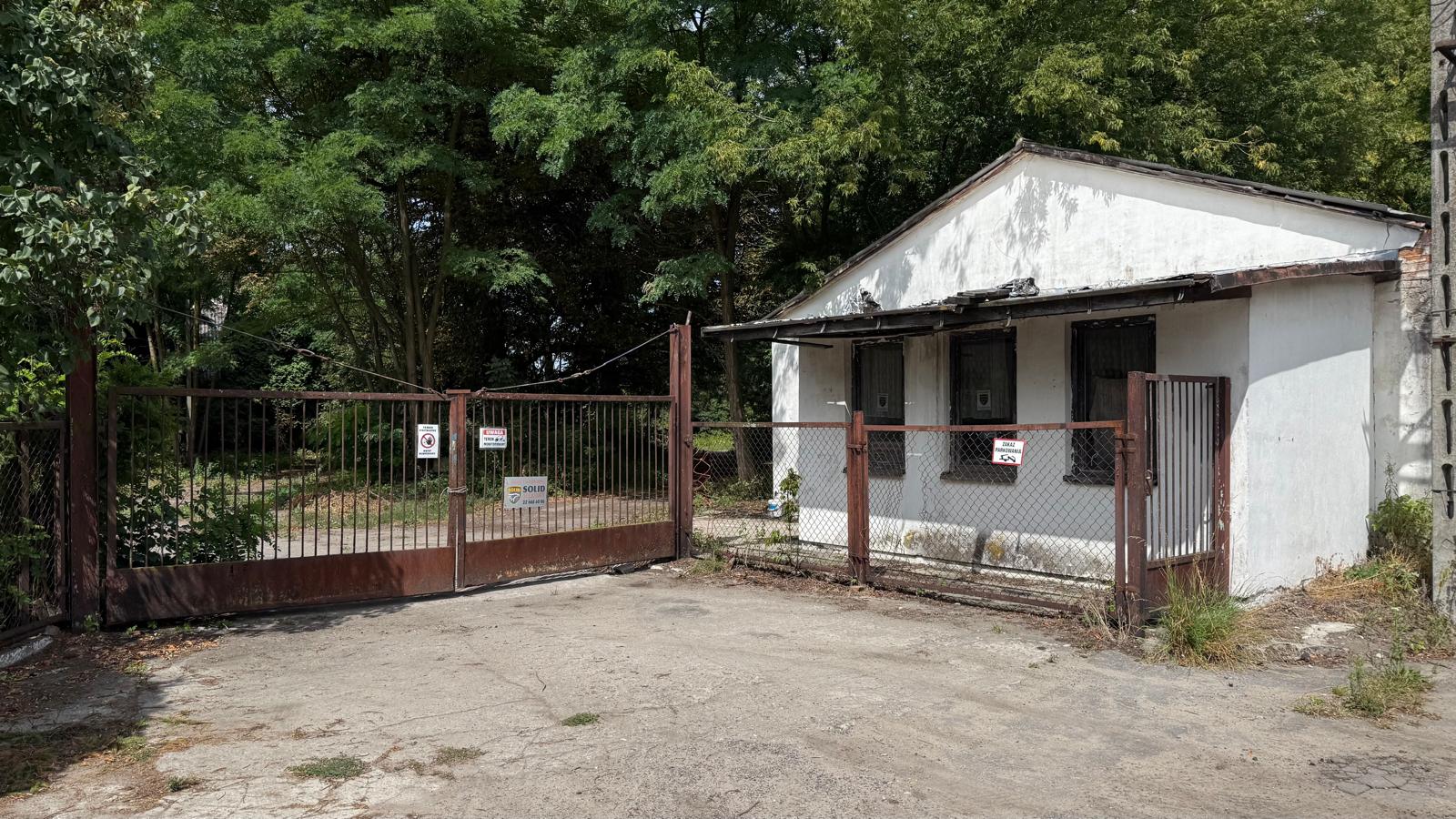
I immediately went to the location myself. As it turned out, the nine-year-old Street View imagery had actually been flattering. What I found in reality were the ruins of an old farm, dense overgrowth rather than an actual access area, wildlife and little else. A neighbour told me that on the day of delivery she had even moved her own car so that Marek’s driver could manoeuvre through the entrance to the supposed “logistics warehouse”.

I called Marek, sent him photographs and we connected with the driver. What I heard was difficult to believe. Marek was devastated.
The driver explained that when he arrived at the location, he contacted Marek’s dispatcher and said that it seemed like a very strange place to deliver metal. There was no forklift on site. The people receiving the cargo wanted to unload it using the tail lift of a delivery van. The dispatcher told the driver not to worry, because the “customer” had confirmed that this was the agreed unloading method. The driver, almost 60 years old and with around 30 years of experience behind the wheel, said: “I just wanted to unload as quickly as possible and get back to the depot a few hours later. Damn it, I could have called the boss instead of listening to a dispatcher young enough to be my son… But it was Saturday, so I didn’t want to bother the boss.” Marek then asked:
– Who signed and stamped the CMR?
– Who do you think? The consignee!
– Company X?
– No.
– Then WHO?
– I don’t remember, but I insisted on getting a stamp because that’s what the trainer told us during the training. They looked around for one and eventually found some stamp. I took a picture of it, and the dispatcher confirmed with the customer that it was the right stamp and that this was supposedly the consignee’s name.
Marek summed it up: “Oh God… we unloaded EUR 800,000 worth of goods in the middle of the bushes.”
I obtained the photographs taken by the driver. Drivers often exchange pictures showing the “amazing” places where they have had to unload – with the winner traditionally getting a beer from the others. The neighbour had also taken several photographs, including pictures of the “consignee’s” vehicles.
The local police initially did not want to take action, so we escalated the matter as far as possible. We connected the facts and, by working together, managed after several days to locate a warehouse containing the stolen metal. And then came another surprise. There were supposed to be 20 pallets. There were 45. Some of the goods belonged to our client. The rest belonged to other companies, which were naturally delighted to learn that their cargo had been found. One owner did not even know yet that his goods had been stolen. The remaining part of the cargo had already been sold for scrap.
A few days later, Marek called me.
– So, Mr Grzegorz, how did it go?
– We recovered part of the cargo worth around EUR 450,000.
– Excellent. And what happens to us now? — Marek asked.
– Do you want the truth, or should I tell you a fairy tale?
– The truth.
Right…
Here we go again.
How many times has this happened already? Thirty? Forty?
– Mr Marek, together with the freight forwarder who entrusted the transport to the fraudster, your company is liable for the loss of goods worth approximately EUR 350,000.
– What? Why? – Marek asked in disbelief.
– In your case, this is considered delivery of the shipment to an unauthorised person and a breach of Article 12 of the CMR Convention. Of course, pursuing a recovery claim against your company will not necessarily be straightforward, but today nobody simply walks away from the possibility of recovering all or a substantial part of an insurance payout.
– God… I don’t have that kind of money, and the insurer will probably refuse to cover the loss…

Both companies involved – the freight forwarding company and the carrier – had procedures in place. Both had trained their employees. The freight forwarder had provided training on subcontractor verification and fraud schemes. The carrier had trained dispatchers and drivers on transport security and improper delivery practices, particularly the risks associated with the so-called “neutralisation” of transport documents.
Training is one thing. Procedures are another. But the race for margin or additional fees can still generate enormous losses for every company involved – and, perhaps even more importantly, lead to something that is frequently underestimated: loss of the company’s reputation. Because in reality, it was the carrier who transported the goods for the criminals free of charge – and may now also face financial liability for doing so.
This case clearly demonstrates that, as always, the driver remains both the weakest and the most important link in the carrier’s side of the transport chain. Despite the dispatcher’s mistakes, the driver could still have prevented the incident right up until the final moment by escalating his concerns directly to the company owner. There are dozens of cases just like this.
What does it matter that I personally trained both companies? What does it matter that their owners were genuinely aware of the risks and invested money in employee training? In the end, employees may still disregard everything they were taught.
The dispatcher concluded that the boss had insurance, so the boss dismissed him.
The driver, as usually happens, simply found another employer.
And the carrier? The carrier was left alone with the problem.
Both companies were left owing me a considerable “debt of gratitude”, because they could expect little effective support either from law enforcement authorities or from the loss adjusters appointed by the insurers.
Carriers – remember this, and make sure your people understand it:
The cooperation between these two elements of a transport company is essential. It is what is commonly referred to as synergy – but this is not just another fashionable management term. It is a practical necessity for the proper and long-term operation of a transport company. Only companies capable of creating this type of cooperation will survive the current crisis in the TSL market and remain attractive partners for freight forwarders.
Despite everything described above – and despite my increasingly cynical view of this industry – I still firmly believe that companies must continuously educate themselves about emerging threats in the TSL sector and about effective ways of mitigating those risks. It is an ongoing struggle against an opponent who is often several steps ahead of us.

The photographs used in this article are not merely illustrative. They were taken at the actual scene of the incident.
Fraud methods in the Transport&Logistics industry are constantly evolving, which means that verifying a carrier only once – or relying on documents, freight exchange profiles and basic checks – may no longer be enough.
BtrustUP helps freight forwarders, carriers and logistics companies verify business partners more thoroughly, identify potential warning signs and make safer decisions before entrusting cargo to a counterparty. The platform brings together key verification data and automates time-consuming checks, helping your team reduce operational risk without slowing down day-to-day business.
Verify smarter. Reduce risk. Protect your cargo. Try BtrustUP free of charge and see how automated carrier verification can support your business.